Pregnancy can bring many questions, especially when it comes to food. One day you may be craving something sweet, while the next day even your favourite food may make you feel nauseous. Many expecting mothers also wonder, “What should I eat for my baby’s growth?” or “Which foods should I avoid during pregnancy?”
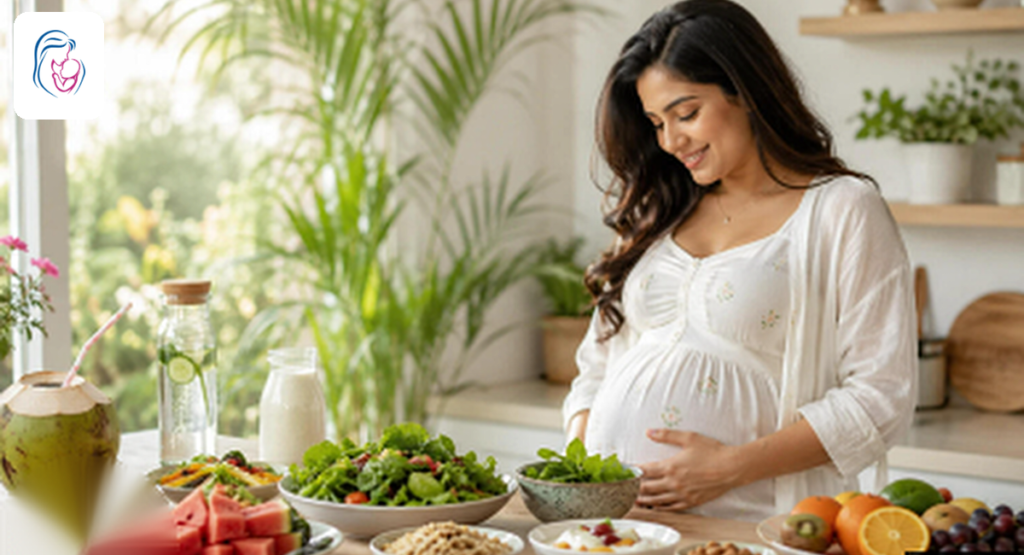
A healthy pregnancy diet does not mean eating expensive foods or following a complicated diet chart. The goal is to eat a variety of nutritious foods that provide protein, iron, calcium, vitamins, fibre and healthy fats while also following basic food-safety precautions.
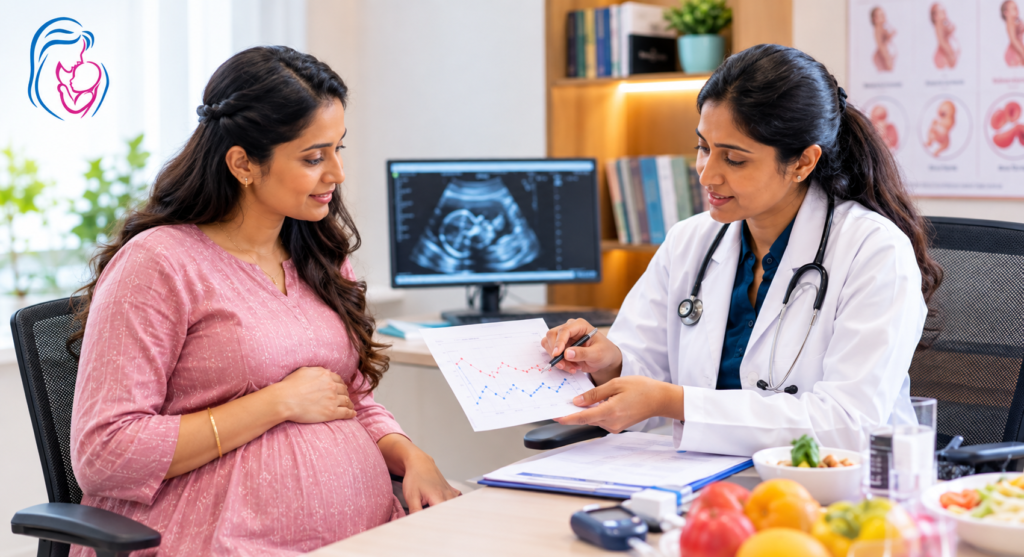
If you are consulting the Best Gynae in Indore, your doctor can also guide you according to your pregnancy, medical history, weight, blood reports and nutritional requirements.
Why Is Food So Important During Pregnancy?
During pregnancy, your body goes through many changes. Your baby also needs nutrients for growth and development.
But there is a common misconception that pregnancy means “eating for two.” You do not simply need to double your food intake. Instead, focus on the quality and variety of your meals. A balanced diet should include vegetables, fruits, whole grains, protein sources, dairy or suitable alternatives, and healthy fats.
For example, instead of having a large plate of white rice with very little protein or vegetables, you can make your meal more balanced with dal, vegetables, curd and a suitable portion of rice or roti.
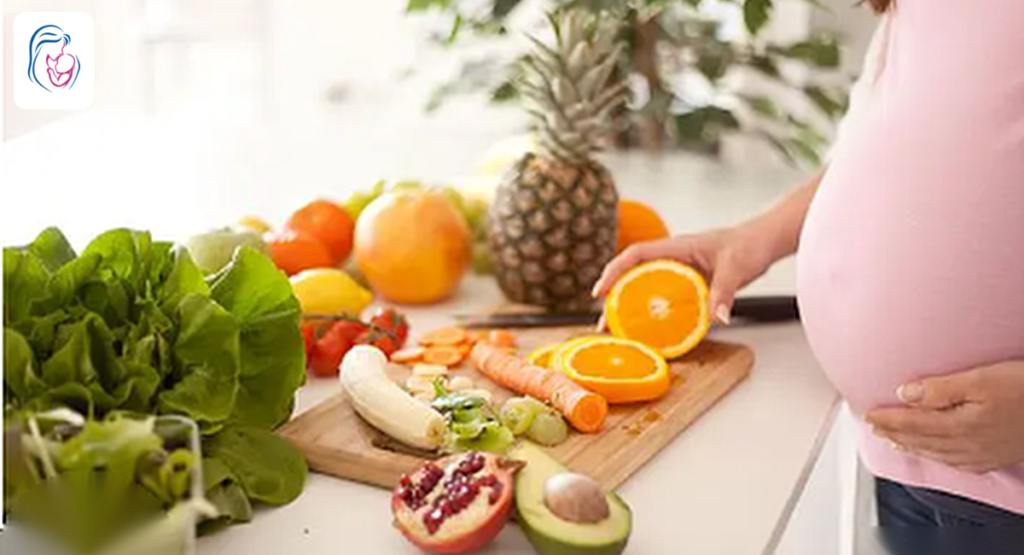
1. Include Plenty of Fruits and Vegetables
Fruits and vegetables provide vitamins, minerals and fibre. Fibre can also help with constipation, which is a common pregnancy complaint.
You can include easily available options such as:
- Apples
- Bananas
- Oranges
- Guava
- Pomegranate
- Seasonal fruits
- Carrots
- Spinach
- Beans
- Peas
- Pumpkin
- Broccoli
You do not need to eat only one “special” pregnancy fruit. Variety is more important.
Always wash fruits and vegetables thoroughly before eating them. Unwashed produce can carry germs that may cause foodborne illness.
2. Eat Enough Protein
Protein supports your baby’s growth and is an important part of a balanced pregnancy diet.
Vegetarian protein options include dal, rajma, chana, beans, peas, paneer, curd, milk, soy products, nuts and seeds.
If you eat eggs, properly cooked eggs can be a convenient source of protein. If you eat meat or poultry, make sure they are thoroughly cooked.
For example, a simple meal of dal + roti + vegetables + curd can provide a combination of protein, carbohydrates, fibre and other nutrients.
The Best Gynae in Indore may recommend changes to your diet if your nutritional requirements are higher because of anemia, diabetes, multiple pregnancy or another medical condition.
3. Choose Iron-Rich Foods
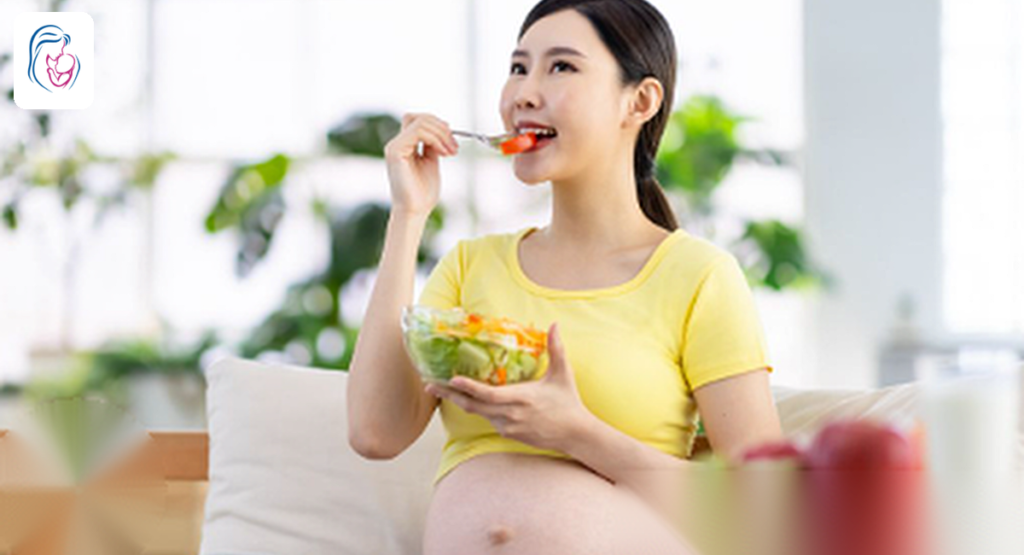
Iron needs increase during pregnancy, and iron is important for making haemoglobin.
Foods containing iron include leafy green vegetables, lentils, beans, chickpeas, peas, meat and fortified cereals.
You can also combine iron-containing foods with foods rich in vitamin C, such as oranges, guava, tomatoes or lemon, as vitamin C helps the body absorb iron from plant-based foods.
However, food alone may not be enough if your blood tests show anemia. Your doctor may prescribe an iron supplement depending on your individual needs.
Do not start high-dose supplements on your own.
4. Include Calcium-Rich Foods
Calcium is important for your baby’s developing bones and teeth and also supports your own bone health.
Good options include milk, curd, paneer and other suitable dairy products. If you use plant-based alternatives, choose calcium-fortified options where appropriate.
Choose pasteurized dairy products during pregnancy. Unpasteurized milk and some unpasteurized dairy products can carry harmful bacteria.
5. Do Not Forget Healthy Fats
Healthy fats can be included through foods such as nuts, seeds, avocado and suitable plant-based oils. Fish can also provide beneficial nutrients.
If you eat seafood, choose lower-mercury options and make sure the fish is properly cooked. Some fish contain higher levels of mercury and should be avoided during pregnancy.
6. Drink Enough Fluids
Pregnancy can make dehydration more uncomfortable, particularly when you are experiencing vomiting or increased sweating.
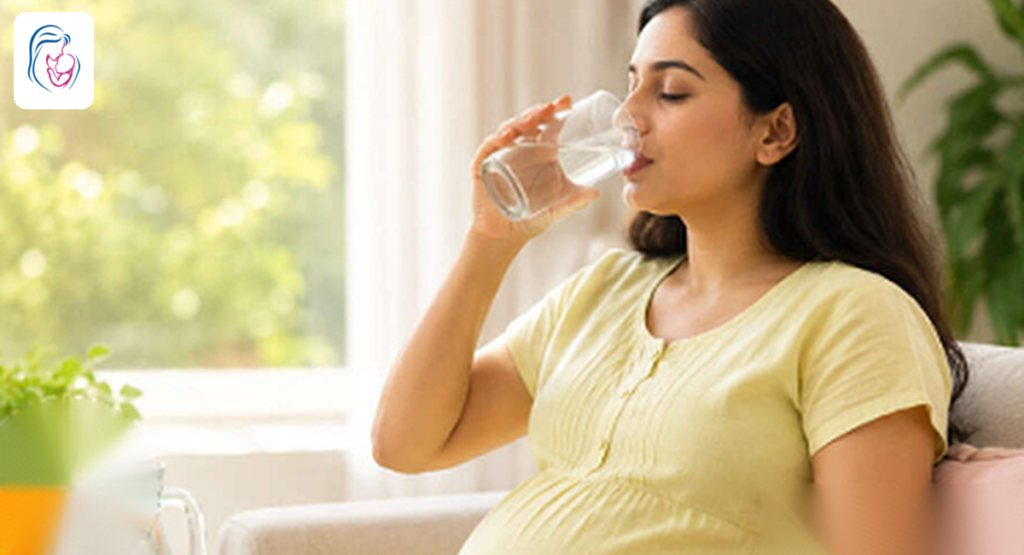
Water should be your main drink. You can also get fluids through milk, soups and water-rich foods.
If vomiting is persistent and you are unable to keep fluids down, speak with your healthcare provider rather than trying to manage significant dehydration at home.
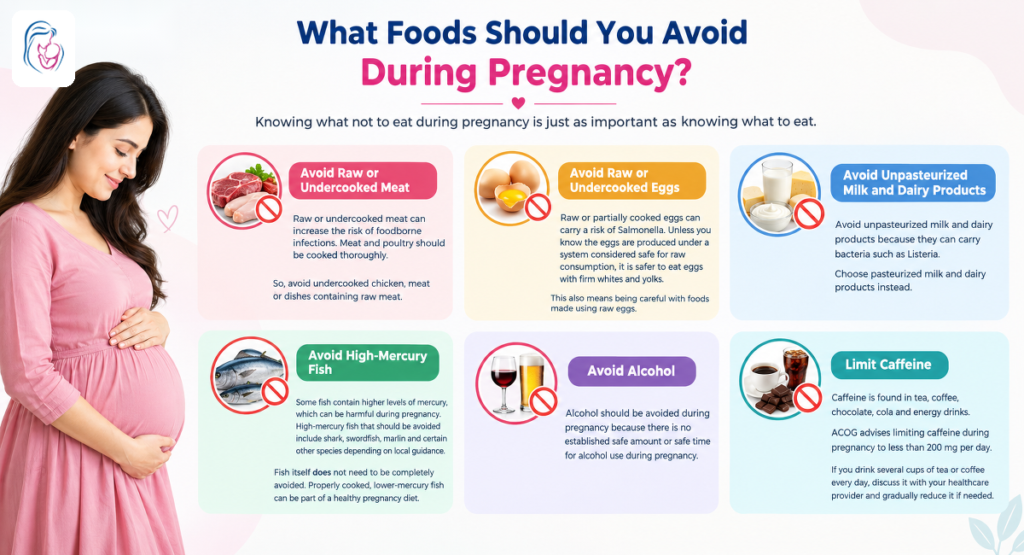
What Foods Should You Avoid During Pregnancy?
Knowing what not to eat during pregnancy is just as important as knowing what to eat.
Avoid Raw or Undercooked Meat
Raw or undercooked meat can increase the risk of foodborne infections. Meat and poultry should be cooked thoroughly.
So, avoid undercooked chicken, meat or dishes containing raw meat.
Avoid Raw or Undercooked Eggs
Raw or partially cooked eggs can carry a risk of Salmonella. Unless you know the eggs are produced under a system considered safe for raw consumption, it is safer to eat eggs with firm whites and yolks.
This also means being careful with foods made using raw eggs.
Avoid Unpasteurized Milk and Dairy Products
Avoid unpasteurized milk and dairy products because they can carry bacteria such as Listeria. Choose pasteurized milk and dairy products instead.
Avoid High-Mercury Fish
Some fish contain higher levels of mercury, which can be harmful during pregnancy. High-mercury fish that should be avoided include shark, swordfish, marlin and certain other species depending on local guidance.
Fish itself does not need to be completely avoided. Properly cooked, lower-mercury fish can be part of a healthy pregnancy diet.
Avoid Alcohol
Alcohol should be avoided during pregnancy because there is no established safe amount or safe time for alcohol use during pregnancy.
Limit Caffeine
Caffeine is found in tea, coffee, chocolate, cola and energy drinks. ACOG advises limiting caffeine during pregnancy to less than 200 mg per day.
If you drink several cups of tea or coffee every day, discuss your intake with your healthcare provider and gradually reduce it if needed.
A Simple Indian Pregnancy Meal Pattern
A practical pregnancy meal does not have to be complicated.
Breakfast: Vegetable poha/upma, oats, stuffed roti with curd, or a properly cooked egg with whole-grain toast.
Mid-morning: Seasonal fruit with a handful of nuts.
Lunch: Roti or rice + dal/beans + cooked vegetables + curd.
Evening: Fruit, roasted chana, makhana, or another nutritious snack.
Dinner: Roti/rice + dal/paneer/egg/chicken + vegetables.
Bedtime: Milk if it suits you.
This is only a general example, not an individual pregnancy diet chart. Your nutritional needs may be different.
A Real Problem Many Pregnant Women Face
Imagine a woman in her second trimester who feels tired all the time. She starts eating more sweets because her family tells her that she is “eating for two.” She also drinks several cups of tea because she feels sleepy.
Instead of simply eating more, she should discuss her symptoms with her doctor. Tiredness can have several causes, including anemia or other health concerns.
A pregnancy consultation with the Best Gynae in Indore can help determine whether blood tests, dietary changes or supplements are needed.
Similarly, if you have gestational diabetes, high blood pressure, severe vomiting, anemia, thyroid problems or another medical condition, your diet may need to be modified.
Food Safety Is Just as Important as Nutrition
Healthy food can still cause problems if it is not handled safely.
During pregnancy:
- Wash fruits and vegetables thoroughly.
- Keep raw and cooked foods separate.
- Cook meat, poultry, seafood and eggs properly.
- Choose pasteurized milk and dairy products.
- Store perishable food properly.
- Avoid food that looks spoiled or has been stored unsafely.
Pregnant women are more susceptible to certain foodborne infections, making food safety particularly important.
When Should You Ask Your Gynecologist About Your Diet?
You should discuss your diet with your doctor if you have persistent vomiting, significant weight changes, anemia, diabetes, thyroid problems, food allergies, nutritional deficiencies, or difficulty eating a balanced diet.
Your doctor may also recommend specific prenatal vitamins or supplements. These should be taken according to professional advice rather than based on recommendations from friends or social media.
The Best Gynae in Indore can help you understand what is appropriate for your pregnancy and whether your diet needs any specific adjustments.
Final Thoughts
Pregnancy nutrition is not about eating more. It is about eating better, safely and consistently.
Include fruits and vegetables, protein-rich foods, whole grains, calcium-rich foods and healthy fats. Drink enough water and follow food-safety practices. At the same time, avoid alcohol, raw or undercooked foods, unpasteurized dairy and high-mercury fish, and keep caffeine within recommended limits.
Every pregnancy is different. A diet that works for one woman may not be appropriate for another, especially when conditions such as diabetes, anemia, thyroid problems or severe pregnancy sickness are present.
If you are looking for the Best Gynae in Indore, choose a qualified gynecologist who can understand your pregnancy and provide personalized guidance on nutrition, supplements, tests and overall pregnancy care.
Frequently Asked Questions
1. What are the best foods to eat during pregnancy?
A balanced pregnancy diet can include fruits, vegetables, whole grains, dal, beans, eggs, properly cooked meat or fish, nuts, seeds, milk, curd and other pasteurized dairy products. The exact diet should depend on your individual nutritional needs.
2. Which foods should I avoid during pregnancy?
Avoid alcohol, raw or undercooked meat and eggs, unpasteurized milk and dairy products, raw seafood, and fish that are high in mercury. Also follow safe food preparation and storage practices.
3. Can I eat fruits during pregnancy?
Yes. Most fruits can be included in a pregnancy diet. Wash fresh fruits thoroughly before eating them. Whole fruits are generally preferable to relying heavily on fruit juice.
4. Can pregnant women drink tea or coffee?
Caffeine should be limited during pregnancy. ACOG recommends keeping total caffeine intake below 200 mg per day. Remember that caffeine can come from tea, coffee, chocolate, cola and energy drinks.
5. Is fish safe during pregnancy?
Yes, properly cooked, lower-mercury fish can be part of a healthy pregnancy diet. However, certain high-mercury fish should be avoided.
6. Should I take pregnancy supplements with my diet?
Some supplements, such as folic acid and iron, may be recommended during pregnancy depending on your individual needs. Do not start or change high-dose supplements without discussing them with your healthcare provider.
7. Can I eat paneer during pregnancy?
Pasteurized paneer can generally be included in a pregnancy diet. Check the source and storage conditions, and avoid dairy products made from unpasteurized milk.
8. What if I have gestational diabetes?
If you have gestational diabetes, your meal pattern and carbohydrate intake may need individual planning. Do not follow a generic pregnancy diet without discussing it with your obstetrician or a qualified nutrition professional.