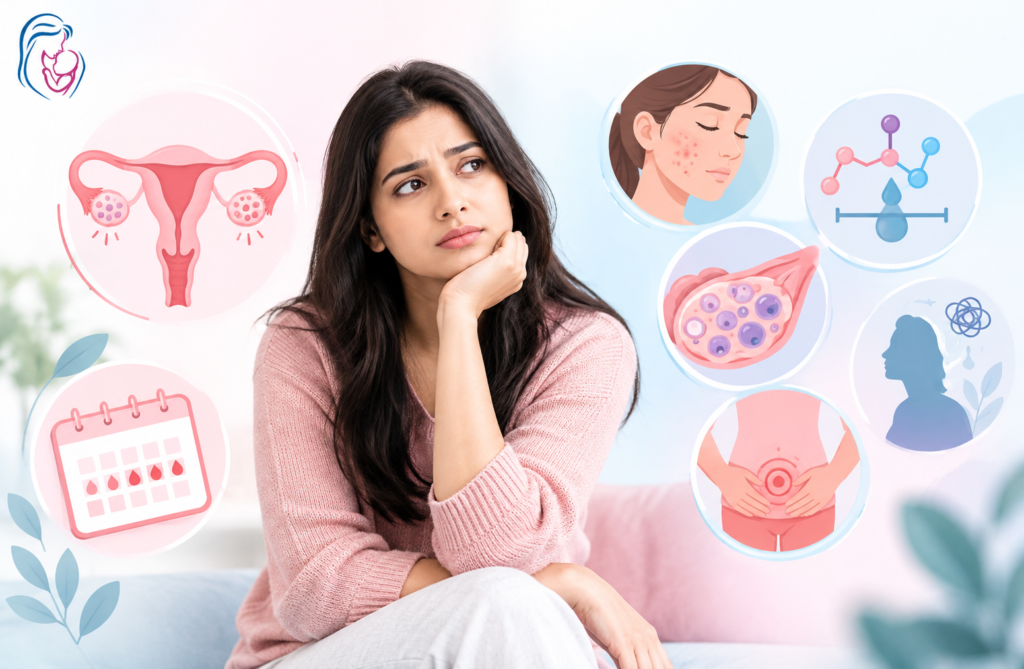
A period that comes late every month, sudden weight gain, stubborn acne, unwanted facial hair, or difficulty getting pregnant can leave a woman wondering, “Is this just a hormonal problem, or is something else happening inside my body?”
These concerns are common, but they should not always be ignored. Conditions such as PCOS, thyroid problems, stress, changes in weight, and other hormonal issues can affect the menstrual cycle. When symptoms continue or start affecting daily life, speaking with a qualified gynecologist can help identify the actual cause.
If you are searching for the Best Gynae in Indore, it is important to look for a doctor who listens to your symptoms, evaluates the possible causes, and explains the treatment options according to your individual needs.
What Is PCOS and Why Does It Affect Periods?
Polycystic ovary syndrome, commonly called PCOS, is a hormonal condition that can affect periods, ovulation, fertility, skin, hair growth, and metabolism.
Many women first notice PCOS because their periods become irregular. One month the period may come after 30 days, another month after 45 or 60 days, and sometimes it may be missed altogether.
Other possible symptoms include acne, increased facial or body hair, hair thinning, weight changes, and difficulty getting pregnant. However, having one or two of these symptoms does not automatically mean you have PCOS. Several other health conditions can cause similar problems.
This is why self-diagnosis based only on symptoms or an ultrasound report may not be enough.
Irregular Periods Are Not Always PCOS
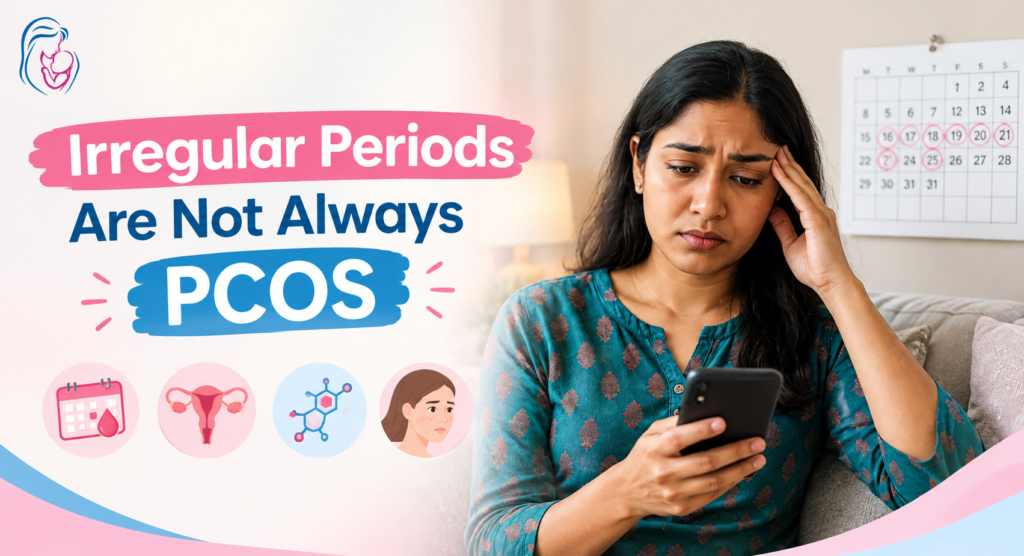
Imagine a young woman who usually has regular periods but suddenly starts missing them after months of intense stress and poor sleep. She may immediately search online and assume she has PCOS.
But irregular periods can have many possible causes.
Pregnancy, significant weight changes, stress, excessive exercise, thyroid problems, hormonal contraception, and PCOS can all affect the menstrual cycle.
That is why a proper consultation matters.
A gynecologist may ask about your menstrual history, weight changes, acne, unwanted hair growth, medications, pregnancy plans, lifestyle, and family history. Depending on your symptoms, blood tests or an ultrasound may also be recommended.
What Does Hormonal Imbalance Feel Like?
“Hormonal imbalance” is a broad term. Hormones control several important functions in the body, including menstruation and ovulation.
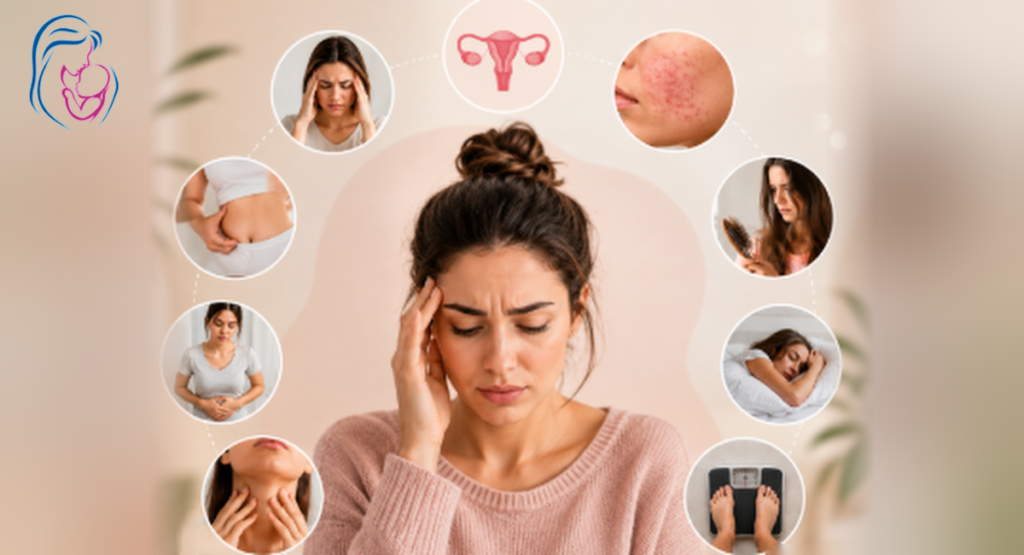
A woman may notice:
- Irregular or missed periods
- Very heavy or prolonged bleeding
- Severe period cramps
- Acne or oily skin
- Unwanted facial hair
- Hair thinning
- Unexplained weight changes
- Difficulty becoming pregnant
- Persistent tiredness
These symptoms can occur for different reasons, so treatment should be based on the underlying problem rather than simply trying to “balance hormones.”
For example, thyroid disorders can also cause menstrual changes.
When Should You Consult a Gynecologist?
You do not need to wait until your symptoms become severe.
Consider scheduling a gynecological consultation if:
- Your periods have suddenly become irregular.
- You repeatedly miss periods.
- Your bleeding is unusually heavy or lasts longer than usual.
- You have bleeding between periods.
- You have severe or worsening period pain.
- You notice sudden facial hair growth or significant acne.
- You are experiencing unexplained weight changes.
- You have been trying to conceive without success.
- Your menstrual problems are affecting your studies, work, sleep, or daily routine.
For example, if you have missed three periods in a row, medical evaluation is recommended.
How Is PCOS Diagnosed?
One common misconception is that seeing “polycystic ovaries” on an ultrasound automatically means you have PCOS.
That is not necessarily true.
Diagnosis involves looking at your symptoms, menstrual pattern, hormone-related signs or blood tests, and sometimes ultrasound findings. Clinical guidelines and patient information commonly describe PCOS diagnosis using a combination of features rather than an ultrasound alone.
Your doctor may recommend blood tests to evaluate hormone levels and other possible causes. Depending on your situation, screening related to blood sugar or metabolic health may also be considered.
The exact tests depend on your symptoms, age, medical history, and whether you are trying to become pregnant.
Can PCOS Be Treated?
PCOS is generally a long-term condition, but its symptoms and associated health concerns can be managed.
Treatment depends on what symptoms you have and your goals.
For someone who is not currently planning pregnancy, treatment may focus on regulating periods and managing symptoms such as acne or unwanted hair growth.
For someone trying to conceive, the focus may be on improving ovulation and addressing fertility concerns.
Lifestyle changes can also be an important part of PCOS management. Regular physical activity, balanced nutrition, adequate sleep, and maintaining a healthy weight when appropriate can support overall health and menstrual management.
Medication should only be taken after discussing your individual situation with a qualified healthcare professional.
What About Painful or Heavy Periods?
Period pain is common, but severe pain that repeatedly interferes with your normal activities should not simply be dismissed as “normal.”
Similarly, very heavy bleeding, prolonged periods, or bleeding between periods deserves medical attention.
There can be different reasons for abnormal bleeding, including hormonal changes and gynecological conditions. A doctor may recommend an examination, blood tests, ultrasound, or other investigations depending on your symptoms.
Keeping a simple period diary can help. Note the first day of your period, number of bleeding days, approximate flow, pain level, spotting, and other symptoms.
This information can make your consultation more useful.
What Should You Look for When Choosing a Gynecologist in Indore?
When looking for the Best Gynae in Indore, do not focus only on online ratings or a single symptom.
Consider whether the doctor:
- Understands menstrual and hormonal concerns
- Evaluates the underlying cause
- Discusses fertility plans when relevant
- Explains investigations clearly
- Provides individualized treatment
- Gives you an opportunity to ask questions
- Encourages appropriate follow-up
Women often feel uncomfortable discussing periods, vaginal symptoms, infertility, or hormonal changes. A consultation should give you a comfortable environment to discuss these concerns openly.
Your Periods Are Giving You Information
Your menstrual cycle can tell you a lot about your reproductive and overall health.
A delayed period once in a while may not mean there is a serious problem. But repeated irregular periods, heavy bleeding, severe pain, acne, unwanted hair growth, or fertility difficulties deserve attention.
Instead of repeatedly searching for home remedies or taking medicines without guidance, consider discussing persistent symptoms with a qualified gynecologist.
If you are looking for the Best Gynae in Indore for PCOS, period problems, or hormonal concerns, choose a professional who evaluates your complete health picture and creates a treatment plan based on your individual needs.
Early evaluation can help you understand what is actually causing your symptoms and what steps may be appropriate for your health.
Frequently Asked Questions (FAQs)
1. Can irregular periods mean I have PCOS?
Not necessarily. Irregular periods can have several causes, including PCOS, thyroid problems, stress, pregnancy, major weight changes, and other hormonal conditions. A medical evaluation can help identify the cause.
2. Do I need an ultrasound to diagnose PCOS?
Not always. PCOS diagnosis is based on a combination of clinical features, menstrual history, hormone-related findings, and sometimes ultrasound. An ultrasound alone does not automatically confirm PCOS.
3. Can PCOS make it difficult to get pregnant?
Yes. PCOS can interfere with regular ovulation, which may make conception more difficult for some women. However, fertility problems associated with PCOS can often be evaluated and treated with appropriate medical care.
4. When should I see a gynecologist for period problems?
You should consider a consultation if your periods repeatedly become irregular, you miss several periods, bleeding is unusually heavy or prolonged, you experience severe pain, or you have difficulty conceiving.
5. Can lifestyle changes help with PCOS?
Lifestyle changes such as regular physical activity, balanced nutrition, healthy weight management when appropriate, and good sleep can support PCOS management. Your doctor can help determine which changes are suitable for you.