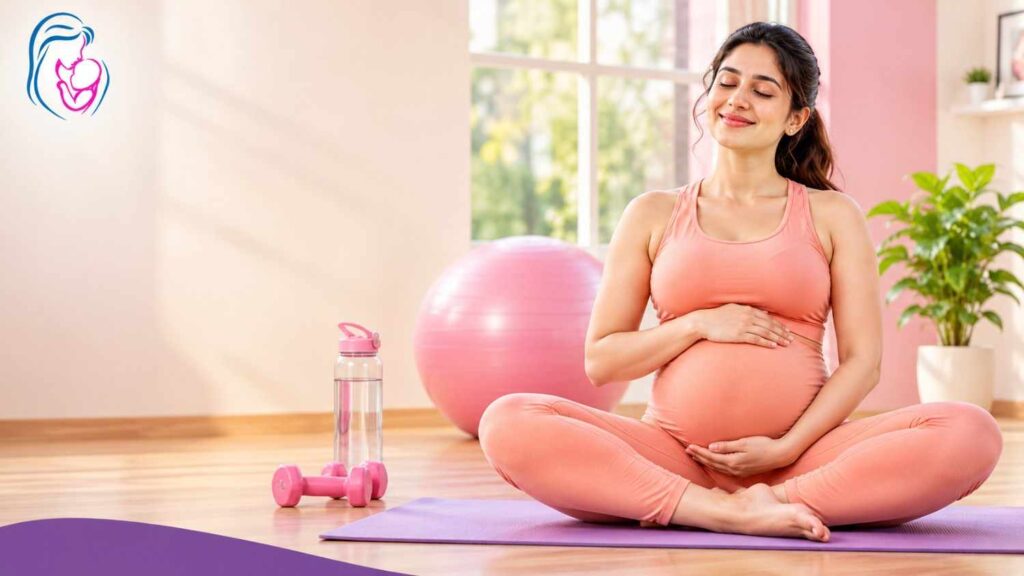
Almost every expecting mother asks the same thing at her first visit: “Can I exercise now?” Some relatives say rest completely. Others say keep walking and do yoga every day. The truth sits somewhere in the middle. For most healthy pregnancies, gentle movement is not just safe, it is genuinely good for you and your baby. As a female gynecologist in Indore, we often meet women who are either scared to move at all or doing too much too soon. This guide will help you find the right balance.
Why Staying Active in Pregnancy Helps
Your body works hard for nine months, and gentle movement makes that work easier. Regular, moderate activity can:
- Ease back pain, leg cramps and swelling
- Improve sleep and lift your mood
- Help you gain weight at a healthy pace
- Lower the risk of gestational diabetes and high blood pressure
- Build the stamina you will need during labour and recovery
You do not need a gym membership or fancy equipment. Even a 20-minute walk after dinner counts.
Is It Safe to Exercise During Pregnancy?
For most women with a normal, uncomplicated pregnancy, yes. General guidance suggests about 150 minutes of moderate activity a week, which is roughly 30 minutes on most days. Moderate means you can still talk while moving, but you could not sing.
Not every pregnancy is the same, though. Your doctor may ask you to limit or avoid exercise if you have bleeding, a low-lying placenta, a weak cervix, a history of preterm labour, high blood pressure, severe anaemia or a twin pregnancy with complications. This is why a quick check with a female gynecologist in Indore before you begin is so important.
Best Exercises for Pregnant Women
- Walking: The simplest and safest option. Start with 10 to 15 minutes and build up slowly.
- Swimming and water exercise: The water supports your weight, which is a relief for aching joints.
- Stationary cycling: A good workout without the risk of falling.
- Pelvic floor (Kegel) exercises: These strengthen the muscles that support your bladder and uterus and may help recovery after delivery.
- Light strength training: Only with your doctor’s approval, using light weights and slow, controlled movements.
Yoga During Pregnancy: What Is Safe and What Is Not

Prenatal yoga improves flexibility, calms the mind and teaches breathing that comes in handy during labour. But pregnancy changes your balance and loosens your ligaments, so some poses need care.
Generally safe poses (with proper guidance):
- Cat-cow pose for a stiff back
- Butterfly pose (Baddha Konasana) to open the hips
- Child’s pose with knees wide apart to make room for the belly
- Gentle side stretches and shoulder rolls
- Slow, easy breathing such as deep belly breathing
Poses and practices to avoid:
- Deep twists that squeeze the belly
- Intense backbends and strong forward folds
- Headstands, shoulder stands and other inversions
- Lying flat on your back for long, especially after the first trimester
- Forceful breathing such as Kapalbhati and Bhastrika
- Hot yoga or practising in an overheated room
Whenever possible, learn from a trained prenatal yoga instructor rather than a random online video. A good female gynecologist in Indore can also tell you which poses suit your stage of pregnancy.
Trimester-by-Trimester Guide

First trimester: Nausea and tiredness are common, so keep things light. Short walks and gentle stretching are enough. Avoid overheating.
Second trimester: Many women feel their best now. This is a good time for prenatal yoga, swimming and regular walking. Avoid lying flat on your back.
Third trimester: Your belly is heavier and your balance is different. Switch to slow walks, breathing practice and pelvic floor exercises. Skip anything that risks a fall.
Every pregnancy is different, so speak to a female gynecologist in Indore before changing your routine at any stage.
Activities to Avoid
Stay away from contact sports, horse riding, heavy lifting, jumping exercises and strong abdominal crunches. Think twice about cycling on busy roads, because a fall can be dangerous. During Indore’s hot summer months, exercise early in the morning or late in the evening and drink plenty of water.
Warning Signs: Stop and Get Help
Stop exercising straight away if you notice any of these:
- Vaginal bleeding or leaking of fluid
- Dizziness, fainting or chest pain
- Unusual shortness of breath
- Regular, painful contractions
- Severe headache or blurred vision
- Pain or swelling in one calf
- Reduced movement from your baby
Call your female gynecologist in Indore immediately, or go to the nearest hospital if the symptoms are serious.
Simple Tips for a Safe Routine
- Warm up for five minutes and cool down slowly
- Wear loose, comfortable clothes and good shoes
- Keep a bottle of water nearby
- Use the talk test: if you cannot talk, slow down
- Listen to your body, because some days rest is the right choice
- Check with your female gynecologist in Indore before trying any new workout
Talk to a Female Gynecologist in Indore Before You Start
Exercise is safest when it is planned around your own health, your scan reports, and your stage of pregnancy. Dr. Neha Khatod (MBBS, MS, FMAS) is an obstetrician, gynecologist, and infertility specialist with over 10 years of experience. She guides women through every stage of pregnancy, from early care to delivery. If you are looking for a caring female gynecologist in Indore, you can visit her clinic in Vijay Nagar, Monday to Friday, 10 AM to 4 PM.
Whether this is your first pregnancy or your third, a trusted female gynecologist in Indore can help you stay active safely. Book your appointment on WhatsApp or call +91 88396-63077.
FAQs
1. Is yoga safe in the first trimester?
Gentle prenatal yoga is generally safe for healthy pregnancies, but the first trimester is when the pregnancy is most delicate. Check with your doctor first, avoid deep twists and overheating, and choose slow, supported poses.
2. How much exercise is enough during pregnancy?
About 30 minutes of moderate activity on most days is a good target. If you are just starting, begin with 10 minutes and increase slowly.
3. Can exercise cause a miscarriage?
Moderate exercise in a healthy pregnancy is not known to cause miscarriage. Risk depends on your individual health, so follow your doctor’s advice, especially if you have had bleeding or pregnancy loss before.
4. Can I start exercising if I never exercised before pregnancy?
Yes. Start with short walks and simple stretching, and avoid sudden intense workouts. Your doctor can suggest a plan that suits you.
5. Does exercise help in normal delivery?
Staying active can build stamina, strengthen your pelvic muscles and help you cope better with labour. It does not guarantee a normal delivery, but it supports your body in preparing for it.
6. Which yoga poses should I avoid during pregnancy?
Avoid deep twists, inversions, intense backbends, forceful breathing (Kapalbhati, Bhastrika), hot yoga and lying flat on your back for long periods.